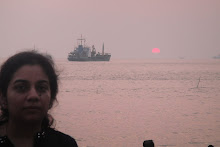
Born and
brought up in India, Indu Sundaresan grew up on the stories of his avid
storyteller father - a fighter pilot. She went to US for her higher studies and
added two degrees to her academic qualifications - M.S. in operations research
and an M.A. in economics. But the storytelling gene in her was too strong to
get subdued by any distraction and she began writing soon after graduate
school.
The
Twentieth Wife, based on the life of Mehrunnisa, Empress Nur Jahan, is the tale
of one of India's most powerful Mughal women. This is her first published which
earned her many accolades.
She is
the author of five books so far. The Twentieth Wife (2002); The Feast of Roses
(2003); The Splendor of Silence (2006); In the Convent of Little Flowers (2008)
and Shadow Princess (2010).
How did the idea of the Taj Trilogy get conceived?
When I
was in graduate school at the University of Delaware, I was homesick one winter
evening. So, I took the bus to the
library, typed in ‘India’ in the subject keyword, and went to the section that
housed books on India—memoirs, travelogues, non-fiction books. I came home with a lot of books, one of which
was on the Mughal harems and Mehrunnisa who was Empress Nur Jahan.
I read
all those books over the ensuing weeks, but that particular one on the Mughal
harems stayed with me after I’d finished my M.S. in operations research and my
M.A. in economics. When I decided to
write a novel, I began, actually with two books set in India in the late 1500s,
entirely fictional…and since they were early books, not well written at
all! But, they got me practicing the
craft, taught me how to write an entire book—beginnings, middles and ends.
After I’d
finished these two novels, and decided that they were no good, I began casting
around for another topic to write on, and remembered that book, went back to
the library to research on Mehrunnisa’s life, and wrote then, my first
published novel, The Twentieth Wife, which is the first novel of the Taj
trilogy.
What are the things in the Mughal dynasty that fascinate you the
most?
You know,
there’s little about the Mughals that’s not fascinating. They lived larger-than-life lives—they loved
passionately; they built palaces, forts, monuments fervently; they came to
India to conquer and stayed on to leave an indelible mark on India’s
history. The Mughal kings also kept
reams of documentation on their lives, their loves, their buildings, their
conquests, their fights and quarrels—a lot of these have not survived through
the ages, but there’s enough to get a fair idea.
The
novels of the Taj trilogy, told mostly from the viewpoint of the women of the
Mughal harems, are about as accurate in factual content as I could make them,
and I had plenty of material to work with!
You have written on strong Mughal women characters who otherwise get
overshadowed by the Royal kings in history books. What was the motivation
behind this?
Most
women in history are overshadowed by the men of their times and their lives—in
Mughal India, it probably was due to the fact that the women lived in
cloistered zenanas, were not seen by the men at court, and rarely revealed
their faces (or their thoughts) to the outside world.
And yet,
in many instances, they were the power to reckon with behind that veil they
wore. Mehrunnisa, Empress Nur Jahan, was
one such authority in the Mughal Empire.
She signed on imperial documents with her own seal; had coins minted in
her name; and sat at the jharoka balcony when she gave audience to
petitioners. All of these were the
prerogative of the ruling king of the empire, not of his wife, especially not a
twentieth wife, so low in the harem’s hierarchy.
The first
two novels of the trilogy, The Twentieth Wife and The Feast of Roses, are about
Mehrunnisa. For the third novel of the
trilogy, Shadow Princess, I skipped a generation and went on to detail the life
of Princess Jahanara.
She was
Shah Jahan’s and Mumtaz Mahal’s oldest surviving child, and after her mother’s
death, she acquired the place of the Padshah Begam in the zenana—an unusual
role even for a Mughal woman to play, because she was a daughter, not a wife,
supreme in her father’s harem. That
position gave her power, plenty of money, and the authority to try and
manipulate the succession politics. She
didn’t succeed, as we know, since the brother she favored, Dara Shikoh, did not
ascend the throne; another brother did, Emperor Aurangzeb.
Out of all the books that you have authored, which is that one book
that you are really proud of? Why?
This is a
tough question; one I try not to answer.
It’s true that for authors, our books are akin to our children, so I try
not to play favorites. Usually, I’m most
attached to the book I’m currently working on, for obvious reasons—my attention
is most focused on that ‘child’ at that moment!
You have written an anthology too. How different are the two styles
of story telling - novel vs short story?
My one
anthology, In the Convent of Little Flowers, is a collection of stories set in
modern India. This was a tough
collection to write, mostly because the topics covered are deeply emotional,
sometimes things about our lives we don’t question, try to ignore.
I write
short stories when I’m in a lull between novels, or even when I’m immersed in a
novel and find that it’s going nowhere fast enough for me. Then, I take a break, think about something
else, work on something short.
The short
story can be satisfying to write when your main focus is novels—simply put, you
construct a narrative, take one moment in a person’s life, build a story around
it, and end it in about 25 pages.
There’s no downtime in my short stories, they gallop, and are meant to
leave the reader breathless at the end.
Any reflection upon what happened?
That comes later.
Which is your
upcoming book, what is it about?
The
Mountain of Light will be published by Harper Collins in India in October,
2013. The title of the novel comes from
the Persian translation of the word Kohinoor—as in the diamond. The novel deals with the last fifty odd years
of the diamond’s existence in India—when it is owned by the rulers of the
Punjab Empire, the Maharajahs Ranjit and Dalip Singh. British officials come to the Punjab court,
asking for Ranjit Singh’s help in the war in Afghanistan, and when he dies, his
lands are annexed to British lands in India.
Dalip is
only six years old when he becomes king of the Punjab, but it’s a shaky throne,
and he’s escorted from his lands under the guardianship of the British and
taught to become a perfect English gentleman.
The Kohinoor is sent in great secrecy to England and to Queen
Victoria. In 1854, Maharajah Dalip Singh
follows his diamond to England; there he’s feted and petted by the queen. As he grows up, he realizes that nothing can
replace the loss of his Punjab, the enormous wealth of his Toshakhana, and his
Kohinoor diamond.
Indian readers read a lot of foreign literature. How are Indian
books received by foreign readers ? Is the scene changing in any way?
This is
true, I never looked at the flip side—Indian readers do read a lot of foreign
literature. There is, recently, a huge
market of Indian-authored books—I think we’re coming into our own now, and
telling our own stories. Frankly,
nothing but good can come out of this, because we each bring our own
perspectives to our histories and our stories.
How is marketing and promotion of a book changing its readership?
What are the best ways to ensure wider reach of a book?
When I
first published The Twentieth Wife in 2002, the internet was still a murky
world. Now, things are much
clearer—readers are online, authors should be also, there are just so many
opportunities.
Many foreign authors have been writing on India as per their
understanding of this diverse nation. What are your views on the different
perceptions captured from foreign lens?
To me,
different perspectives on India, from non-Indians, are always interesting. Sometimes they’re not so accurate, and
sometimes they tell us things about ourselves that we might not otherwise
notice.
How would you compare publishing industry in India with its
counterpart in other countries? Which are the areas that can be improved upon
in Indian publishing field?
The
Indian publishing industry in English—just as Indian authors—is also coming
into its own. My mother translated the
novels of my Taj trilogy into Tamil, and we’re published in Chennai by one of
the premier historical fiction publishing houses, Vanathi Pathipakkam. It’s in dealing with Vanathi that I’ve
realized that the local language market is long established, and extremely
vibrant.
The
English language market publishers are likewise brilliant in India, especially
in acquiring Indian authors from within the country—the range of Indian writing
now, both in India and abroad is quite astounding.
Which are your favourite authors - Indian or foreign? Which is your
all time favourite book?
I grew up
reading a lot of fiction from England, the classics—and in many ways, since
they’re favorites from childhood, they are books I return to over and over
again. From the sheer number of times
I’ve read Pride and Prejudice and all of Austen, it’s probably my favorite
book.


.JPG)
.JPG)
.JPG)


.JPG)


 Title :
The City of Ember
Title :
The City of Ember


.png)


 Posts
Posts