Reviewed five books which capture the diversity and chaos that is inherent to India here at Spark.
Tuesday, August 6, 2013
India Decoded Through Foreign Writings
Reviewed five books which capture the diversity and chaos that is inherent to India here at Spark.
Sunday, July 7, 2013
Travelogues and Travel-blogs
Along the Ganges by Ilija Trojanow - Here the
author recounts the journey of river Ganga from its inception in pristine
snowcapped peaks of Himalayas till its maturity when it rushes to meet the
ocean. From vivacity of youth in the mountains, poise of a young woman
in plains to a veteran near the mouth of the ocean, the author witnessed all.
Ganga is much more than a river for millions of believers and the author is
mesmerised how amidst extremes of archaic traditions and miraculous modernity
Ganga zigzags her way for hundreds of miles.
One Life to Ride by Ajit Harsinghani - A travel
diary of sorts, Ajit's motorcycling adventure through the mountain range of
Himalayas is a wonderful write up on his experiences through various villages,
across meandering rivers and through sloping steep mountains. The narrative is
simplistic yet it beautifully brings out the signature earthiness of the
mountainous terrain.
Bill Bryson is one of the most acclaimed names
in the field of travel writings. Whether it is - an adventure trek on
AppalachianTrail (Walk in the Woods),his report on a country which doubles up as a continent (In a Sunburned Country), retracing a youthful European backpacking trip from Scandinavia to Istanbul (Neither Here Nor There) or his report on his adopted country Britain - the land of Shakespeare (Notes from Small Island), Bill Bryson packs right proportion of information, facts, humour, wit and his hallmark panache in his writings.
China Road by Rob Gifford - National Highway
312, length 4,967 km(3086 miles), from Shanghai to Khorgas, runs across the
complete breadth of China from east to west. Rob Gifford journeyed route 312
for six weeks, passed through the old Silk Road which runs through the Gobi
desert to Central Asia to Persia and to Europe.
He met competitive entrepreneurs, rural people, frustrated and angry
citizens and witnessed depleting morality, weakening cultural values, modernity
and excitement galore. China Road brilliantly brings out the heterogeneity of
modern China as it marches forward to become the next global superpower. Mridula's - TravelTalesFromIndia
Ekta and Puru's - MyYatraDiary
Arun Bhat's - PaintedStork
Anuradha Goyal's - AnuradhaGoyalBhushavali's - TravelBhushavali
Anita Bora's - AnitaBoraBlog
Anil's - WindySkies
Anil Yadav's - ClimberExplorer
Kiran's - AceGuide
Friday, December 9, 2011
Book Review : City of Djinns

Title : City of Djinns
Author : William Dalrymple
Publisher : Penguin Books India
ISBN : 978-0-143-03106-2
William Dalrymple is an accomplished historian and a great narrator. City of Djinns traces back the history of a fascinating city- Dilli or Delhi, which has innumerable stories buried deep in the folds of centuries that it stood witness to. The bygone eras are beautifully brought to light in this book taking the readers to a retro journey to find the roots of the city which was believed to be first established as Indraprastha (the original name) by the Pandava borthers, post Kurukshetra battle. Since that time, the city has been through a lot, has witnessed a lot, has endured a lot, has lost a lot and has transformed a lot. This is one city which has displayed unmatched resilience as beautifully worded by the author here , "Though it had been burned by the invaders time and time again, millennium after millennium, still the city was rebuilt, each time it rose like a phoenix from the fire. "
During his one year stay in Delhi, William actually travelled centuries back trying to delve deep in the past of the city which makes it what it is today. He introduces the readers to the two worlds of the same city as they now exist - Old Delhi and New Delhi. Old Delhi which was once an epitome of prosperity, sophistication, culture and magnificence is nothing more than a graveyard of Mughal era now. What is visible now is just the sad reminder of the past, and the ugly face of poverty and ruin at every nook and crevice of the place. This is the same place which bore testimony to the zenith and nadir of great dynasties.
In contrast, New Delhi is what urban India represents - which initially became the shelter for people who poured in from the partitioned Pakistan during 1947 and later from Punjab during 1984 riots. These people, predominantly Punjabis are the business class elite and there is mutual despise between the citizens belonging to these two different worlds. Dalrymple points out that these two diverse worlds meet briefly at the traffic lights as outstretched palms are thrust through the open car windows. The plight of Old Delhi is evident from this excerpt - "Today Old Delhi is a dustbin. Those who can afford have houses outside the walled city. Only the poor man who has no shelter comes to live here. Today there are no longer any educated men in the old city. All the learning, all the manners have gone. Everything is crude now."
Not many places can claim to have been a witness to such extremes as - the affluence and prosperity of Mughal reign versus Persian Massacres in 1739, aestheticism at its best during the reign of emperors like Shah Jahan versus the plunder by British post 1857 mutiny, magnificent architectural genius which have withstood the harshest tests of times versus the indifference towards the same and letting these monuments crumble with time, safe haven for physically and emotionally bleeding people who migrated from Pakistan during partition versus new wounds that were opened in 1984 riots, and much more.
Where does the city stand today? Is there no one left to even remember the likes of Mir, Zauk, Ghalib, Dagh? Is there no patron of chaste Urdu any more? Has the city become a carcass without its soul?
City of Djinnns is a very well researched piece of writing and the mention of dates, eras and the sources of information bring in the authenticity of the same.
Dalrymple takes the readers along to various places, sights and experiences in his venture to dig deeper into the enigmatic city that is Delhi. He joins in the celebration of various Indian religious festivals and vividly presents the experiences. He spends time in the society of eunuchs who earlier were entrusted the task of guarding the Mughal harems but are now literally shunned by the society to fend for themselves by performing at weddings and births. He visits Sufi enclaves which have a huge following by people of all religions and beliefs. He also interviews many Anglo Indians who are completely disowned by both - the country of their birth (India) and the country with which they have blood ties. He meets those who are trying to defy change of times by taking pleasure in continuing the tradition of partridge fights and pigeon collection.
However, I found two irritants in the narration - on a couple of occasions the author delves deep into too many intricate details about a particular person or incident which takes the focus off the mainline narrative. Such places in the book prove to be big diversions in the otherwise well connected and understandable commentary on history.
Secondly, the mention of same old (ab)normal Indian stuff that has been poked fun at by many other Western authors. I guess my expectations run much higher from an author of William Dalrymple's stature and sensibilities, who has experienced Indian slice of life very closely for many years.
Thursday, February 10, 2011
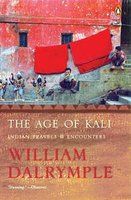
Book Review : The Age of Kali

Title : The Age of Kali
Author : William Dalrymple
Publisher : Penguin India
ISBN : 978-0-143-03109-3
Kaliyug or the Period of Kali is the last of the four Hindu periods contained in mahayuga - the great age of the world. The age of Kali is when the imperfections are so overpowering that the doomsday is not far behind and a new cycle begins.
After having read 'The Age of Kali' by William Dalrymple, I just wondered, perhaps defining India means, getting the feeling of 'Neti Neti' (its neither this, nor that). Such unbelievable diversity in every aspect of human existence - from religion, culture, dressing habits, eating habits, faiths, beliefs, notions, values, to of course financial levels. As is said about Mahabharata, if it is not in this big epic, it is nowhere in the world. I think the same can be said about India to a certain extent.
William Dalrymple brings to us the glimpses of such huge multifariousness in the Indian subcontinent through the essays which chronicle a nation's struggle to rise above the ancient and modern forces which are trying to pull it in opposite directions.
He has brought out the coexistence of stark contrast by introducing the readers to the land of kamasutra, the land where shivalinga is one of the most sacred symbols in the temples, the land celebrating the beauty in the form of Khajuraho figurines and the same land where 'Sati mata' is still revered in some parts, where a woman (Sathin) is severely penalized for having attempted to stop a child marriage and where widows are left to begging in the streets of Vrindavan. But this is not all. He also opens a small window to peek inside the glitterati of Bollywood - the film industry of India and where women like Shobha De cater to the needs of people looking for spicy gossips and erotic writings.
Then there are some essays on the places like Lucknow, which bloomed culturally under the reigns of Mughal emperors and Nawabs who were 'liberal and civilized figures' - the great connoisseurs of poetry, dances, books and plethora of art forms. But such places are now completely bankrupt after having endured the plunder by Britishers, and by corrupt politicians, government officials and drug tycoons, post independence. In states like Bihar and Uttar Pradesh anarchy is rampant, especially in political arenas where elections are won by power, money and force rather than fair play. On the other hand there is Bangalore which has been unofficially christened as 'Silicon Valley of India' and offers hope of a better tomorrow for the whole country.
The author then talks about the financial and economic revolution by reporting about how the middle class families struggled in the seventies to buy their first fridge or a black and white television but quite suddenly there seemed to be a lot of money post 1989 economic deregulations and free market reforms. And subsequent deluge of TV channels brought the cultural invasion in the country.
There are some observations that he has very rightly made - India is struggling to shake away from the age old beliefs and caste system which seem to hold their fangs tight on the people very rigidly and refuse to die down. The unfortunate nexus between the religion and politics pushes the nation many times at the brink of volatile situations. The sluggish public sector is one major impediment in the growth of the nation, if not the sole one.
While reading the first half of the book, I was wondering - do such books sensationalize the events and issues more than they actually are but then the counter argument is, can anything non-existent be sensationalized?
But these essays do suffer from a few pitfalls - William Dalrymple has reported the actual events after interviewing many people but the actual flavor of India is lost somewhere especially of modern India which is committed to march ahead despite innumerable hurdles and push-pull forces from all conceivable quarters. The chapters are dedicated to the most depressing incidents in the life of the country in the last two to three decades which offer just one side of the picture. Moreover, I feel the analysis part got overshadowed by verbatim reporting of the people on many incidents and cases. From an author of William Dalrymple stature, I was expecting more deeper and broader scrutiny of the same which unfortunately came only in bits and pieces.
Found this quote from the book worth mentioning here "The eye of faith can often see much that is hidden from the vision of the non-believer". How true and sums up the belief system in one simple sentence.
I like William Dalrymple's writing style but would like to add 'India is not just this'.
Friday, January 15, 2010
Book Review : Nine Lives (In Search of the Sacred in Modern India)

Nine lives - nine stories of faith and reliance. William Dalrymple is one of the greatest story tellers and travel writers of his generation. After having explored India for twenty-five years, he has wonderfully compiled extraordinary stories of nine individuals who are following different paths of faith in response to the spiritual calling and have deep conviction in what they follow. For people who have seen only the mainstream lifestyles it is very hard to imagine even the existence of such lives.
Other than India, nowhere else in the world, there is so much diversity in almost anything and everything ranging from the religions, languages, lifestyles, eating habits, dressing sense to almost every aspect of life.
A Jain nun trying hard to come out of the shackles of attachment. The attachment that she feels for her friend nun, who starved herself to death (as a part of final renouncement). Now she is on an apparently very difficult path of being a Sallekhana herself - which starts by first giving up home, then possessions and finally the body itself.
A prison warden, who feels proud to be a Thyyam dancer for two months in a year and keeps looking forward to these two months the rest of the year. During those Thyyam dance performances people take him to be an incarnate of deity and worship him.
The daughters of Goddess Yellamma called Devdasis who think it is destined for them to be a temple prostitute. A life story of one such Devdasi who was forcibly pushed into this profession but now she is doing the same to her daughters as she feels it is the call of their sacred faith.
A Tibetan Buddist monk, who very early in his life saw the true purpose of his life and left everything behind to follow his faith. During the period of Chinese invasion in Tibet, he takes up arms inspite of the non-violence preached by Buddha and now while still in exile in India, he is trying to atone for the sins that he had to commit to save his homeland. Still praying and hoping that he breathes his last in his free homeland.
A woman after having left her family in Calcutta in search of the divine goddess – Tara, now lives as a Tantric in a remote cremation ground. She finds the love and satisfaction of her life in one of the most unexpected places of all.
All unique stories and detailed account of the lives of these individuals, starting from their early years and how they all decided to take up these unconventional paths have been presented by Dalrymple for the readers to enjoy. He very rightly points out that even though majority of parts of India are aggressively running forward in every field keeping pace with the rest of the world but some parts are still deceptively innocent and timeless.
The travel writings hold the attention of the readers only if they are treated with great enthusiasm by the writer so that readers feel like travelling to that part of the world and experiencing the same joy. I think William Dalrymple has successfully executed this part. I am sure in 25years that he spent travelling around and exploring India, he must have come across a lot more than what has been compiled in the book so he must be appreciated for the filtering that he did to bring the best for the readers.
Inclusion of some pictures of the regions of India from where he has selected the nine lives would have been an icing on the cake, as is rightly said - a picture speaks a thousand words.

.png)