Showing posts with label india. Show all posts

Friday, December 23, 2016

Book Review : Subcontinental Drift

Title : Subcontinental Drift
Author : Murray Laurence
Publisher : Aleph
ISBN : 978-93-83064-25-0

A book on India by a foreigner. Actually so many books have been written by awestruck foreigners on India that it has almost become a genre of books in itself.
An Australian travel writer found his life changed post his first overseas trip to Indonesia where his tryst with Asia began.
He first travelled through the country in 1970s but the 'weird' land strangely and mysteriously hypnotised him into returning to India over and over again as his fascination for the strange land never left him.

The book 'Subcontinental Drift' is actually a collection of his travel stories which are almost like his adventures in a wonderland where nothing is unexpected. He has segregated his stories on the basic of timeline under three categories - a) Young and At Large in India (The 1970s) b) Drifting (The 1980s to the end of the 20th century) c) Condemned to India (The 21st Century). As he travelled extensively through India, he could fathom deep to appreciate the uniqueness and the basis of the age old beliefs which are reflected in his writings. The fluidity with which he narrates his experiences is a pleasurable experience in itself. His wonderful play with words keep the readers engaged till the last page.


Having read many such similar books, I just want to comment that what these authors present is still just what appears on the surface because as our religious scriptures describe the supreme power by - (Neti, neti) this is not it, this is not it!, so is true about India too. It is no exaggeration to say that  if there is any possible adjective for a place, it may very well be true for India.

Tuesday, August 6, 2013

India Decoded Through Foreign Writings

If there is one place on the face of earth where all dreams of living men have found home from the very earliest days when man began the dream of existence, it is India – Romain Rolland

India is not, as people keep calling it, an underdeveloped country, but rather, in the context of its history and cultural heritage, a highly developed one in an advanced state of decay – Shashi Tharoor

Reviewed five books which capture the diversity and chaos that is inherent to India here at Spark

Tuesday, November 20, 2012

Book Review : Manto


Title : Manto
Author : Sadan Hasan Manto (Translated by Aatish Taseer)
Publisher : Random House India
ISBN : 978-8-184-00144-0

The author Sadan Hasan Manto born in undivided India donned many hats ranging from being a radio and film scriptwriter, journalist to a short-story writer. Though his short stories created many controversies yet he is acclaimed as one of the greatest story tellers of his times. In Manto's words, "If you find my stories dirty, the society you are living in is dirty. With my stories, I only expose the truth." Originally written in Urdu, his short-stories have been translated by none other than an accomplished writer himself - Aatish Taseer. Perhaps this is the reason that while reading this translation I never felt the missing link which usually the regular translations suffer from. The language is great and even though I have not read the original Urdu stories, I still could enjoy the details and nuances as would be done while reading classics of seasoned authors. So my compliments to Aatish Taseer that he brought the works of Manto to wider audience.

After reading these short stories, the most significant thing that could be said about the writing is that - his stories carry much more beyond the written text and understanding what is written between the lines make the stories and the story teller tower higher than the crowd.

Manto's stories introduce the readers to the realities of life and there are times when the reality is not very pleasing for the eyes and otherwise. Since his writings are around the time of partition, they do carry a somber mood and pessimism to a certain extent. This book brought back the memories of the writings of Khushwant Singh, Gurcharan Das, Gulzar and likes of them. Manto's writing has similar sensitivity and emotional aspect to them whether it is about : 'Toba Tek Singh' - a lunatic caught in no man's land, 'The Last Salute' which depicts friends turning into foes, child prostitute in 'Ten Rupees', cultural boundaries in 'The Mice of Shah Daulah' or the plight of a father after seeing her lost daughter in 'Khol Do'. Every tale stirs many deep seated strings within the hearts of the readers and I consider that an achievement of the storyteller.

The stories are set mostly in North western region of India which bore the brunt of partition the most. These 11 sensitively written stories explore those aspects of some lives which usually are left unspoken and un-talked about. In spite of belonging to conservative era, Manto did not hesitate to write about sensitive subjects so his writings were much ahead of his time. Usually women centric, the stories bring out the aspects which go beyond the realm of rationality and logic. These perceptive short stories would surely keep haunting the readers in times of non-activity.

Tuesday, July 3, 2012

Book Review : The India I Love


Title : The India I Love
Author : Ruskin Bond
Publisher : Rupa 
ISBN : 81-291-0397-4


Ruskin Bond mesmerizes his readers yet again through his straight from the heart collection of prose and poems. This is his way of expressing his feelings for his beloved adopted country with all her animate and inanimate beings, their uniqueness, their character and how all these combine to create a unique flavour of Indian-ness.

In some chapters, he reminisces about his earlier days, the time when he decided to make India and specifically her hills his home and leave West for good. In his words, "The link with Britain was tenuous, based on heredity rather than upbringing.  It was more in the mind. It was a literary England that I had been drawn to, not a physical England. " 
He talks about the mountains and hills, rivers and its tributaries, various people and their idiosyncrasies.
He sprinkles the chapters with some nuggets of wisdom that he has processed over the years by observing people and his surroundings keenly.
"A well-balanced person : someone with a chip on both shoulders
Experience : The knowledge that enables you to recognise a mistake when you make it the second time
Sympathy : What one woman offers another in exchange for details
Worry : The interest paid on trouble before it becomes due"

His adroitness to write about himself with utmost sincerity and transparency becomes apparent time and again by the ease with which he packs self-mockery in his writings. His honesty and humility reach out to the readers unadulterated as he cloaks his feelings in simple yet effective language.  A slice of his humility and critical analysis of himself get reflected in these lines -
"I am not the most inventive of writers, and fantastical plots are beyond me. My forte is observation, recollection and reflection. "

Ruskin Bond's writings are so true to the soil of this country in its original form, it clearly displays his sensitivity in observing, experiencing, absorbing, imbibing and processing the Indian-ness in his system and what comes out through his pen is the essence of his relationship with the country and with everything belonging to it. 
The peace and serenity in his writings transport the readers to a blissful state of living the life in its entirety with every single moment registering its presence and with every single thing getting observed, acknowledged and appreciated in the same way as Ruskin Bond does on his solitary walks.
"I prefer walking alone to walking with others. That ladybird on the wild rose would escape my attention if I was engaged in a lively conversation with a companion. Not that the ladybird is going to change my life. But by acknowledging its presence, stopping to admire its beauty, I have paid obeisance to the natural scheme of things of which I am only a small part."

Whenever I get a chance to conduct interviews with the authors, I often ask them for their suggestions to the aspiring/budding authors. But without having directly asked Ruskin Bond, I got the answer from him in this book -
"If you, dear reader, have any ambitions to be a writer, you must first rid yourself of any notion that perfect peace and quiet is the first requirement. There is no such thing as perfect peace and quiet except perhaps in a monastery or a cave in the mountains. And what would you write about, living in a cave? One should be able to write in a train, a bus, a bullock-cart, in good weather or bad, on a park bench or in the middle of a noisy classroom.

While I was editing this review, I noticed that I have used so many of his quotes directly here. This clearly shows that no words are worthy enough to carry the essence of his writings and they are best as they are. 

Tuesday, February 14, 2012

Book Review : Indian English


Title : Indian English

Author : Jillian Haslam

Publisher : New Generation Publishing

ISBN : 978-1-908775-00-9


After having read 'The City of Djinns' I got keenly interested in finding more about how the post-independence era in India treated the people who were not considered Indians yet were no less Indians. I look to read more on the White Mughals, Indian English and about people who just chose or were forced to stay back in India after the British rule ended and this book fell into that category.


Indian English is a memoir of Jillian Haslam who shares her experiences of growing up in the period of post-colonialism in India and what it took from her and from her family for being different in a country who was going through its own infancy period. She recalls her journey of life which began from damp, dingy and narrow by-lanes of Calcutta where she saw misery very closely in the form of poverty, hunger, racism, abuse, death and hopelessness. But despite all these odds against the family, she managed to carve her way out of that misery and gradually brought her immediate family out of it too. She does mention that for every wrongdoing towards them, she did experience some kindness somewhere even though of lesser magnitude or seemingly insignificant which kept her faith alive all through the troubled years.


Now having her past behind her, she is instrumental in helping many individuals stuck in desperate situations, through her foundation. She has become an epitome of inspiration, grit and determination for many.


Though it is a memoir yet I found the natural sensitivity lacking which memoirs usually bring for the readers. I found the writer repeating herself many times throughout the narrative which makes the whole reading experience a little drab. I do not want to sound heartless when I say this that there are a lot of factors which contribute to the success or failure of any thing and in my humble opinion, the author has ignored evaluating the whole situation radically, including, commenting on the personal choices being made by the parents or siblings or the family as a whole.


I felt really bad that somewhere somebody had to undergo this much pain but I would blame it on not so good narration and editing, that the book failed to evoke the emotions which such books usually do.

Thursday, February 10, 2011

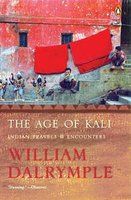
Book Review : The Age of Kali

Title : The Age of Kali

Author : William Dalrymple

Publisher : Penguin India

ISBN : 978-0-143-03109-3


Kaliyug or the Period of Kali is the last of the four Hindu periods contained in mahayuga - the great age of the world. The age of Kali is when the imperfections are so overpowering that the doomsday is not far behind and a new cycle begins.


After having read 'The Age of Kali' by William Dalrymple, I just wondered, perhaps defining India means, getting the feeling of 'Neti Neti' (its neither this, nor that). Such unbelievable diversity in every aspect of human existence - from religion, culture, dressing habits, eating habits, faiths, beliefs, notions, values, to of course financial levels. As is said about Mahabharata, if it is not in this big epic, it is nowhere in the world. I think the same can be said about India to a certain extent.


William Dalrymple brings to us the glimpses of such huge multifariousness in the Indian subcontinent through the essays which chronicle a nation's struggle to rise above the ancient and modern forces which are trying to pull it in opposite directions.


He has brought out the coexistence of stark contrast by introducing the readers to the land of kamasutra, the land where shivalinga is one of the most sacred symbols in the temples, the land celebrating the beauty in the form of Khajuraho figurines and the same land where 'Sati mata' is still revered in some parts, where a woman (Sathin) is severely penalized for having attempted to stop a child marriage and where widows are left to begging in the streets of Vrindavan. But this is not all. He also opens a small window to peek inside the glitterati of Bollywood - the film industry of India and where women like Shobha De cater to the needs of people looking for spicy gossips and erotic writings.


Then there are some essays on the places like Lucknow, which bloomed culturally under the reigns of Mughal emperors and Nawabs who were 'liberal and civilized figures' - the great connoisseurs of poetry, dances, books and plethora of art forms. But such places are now completely bankrupt after having endured the plunder by Britishers, and by corrupt politicians, government officials and drug tycoons, post independence. In states like Bihar and Uttar Pradesh anarchy is rampant, especially in political arenas where elections are won by power, money and force rather than fair play. On the other hand there is Bangalore which has been unofficially christened as 'Silicon Valley of India' and offers hope of a better tomorrow for the whole country.


The author then talks about the financial and economic revolution by reporting about how the middle class families struggled in the seventies to buy their first fridge or a black and white television but quite suddenly there seemed to be a lot of money post 1989 economic deregulations and free market reforms. And subsequent deluge of TV channels brought the cultural invasion in the country.


There are some observations that he has very rightly made - India is struggling to shake away from the age old beliefs and caste system which seem to hold their fangs tight on the people very rigidly and refuse to die down. The unfortunate nexus between the religion and politics pushes the nation many times at the brink of volatile situations. The sluggish public sector is one major impediment in the growth of the nation, if not the sole one.


While reading the first half of the book, I was wondering - do such books sensationalize the events and issues more than they actually are but then the counter argument is, can anything non-existent be sensationalized?

But these essays do suffer from a few pitfalls - William Dalrymple has reported the actual events after interviewing many people but the actual flavor of India is lost somewhere especially of modern India which is committed to march ahead despite innumerable hurdles and push-pull forces from all conceivable quarters. The chapters are dedicated to the most depressing incidents in the life of the country in the last two to three decades which offer just one side of the picture. Moreover, I feel the analysis part got overshadowed by verbatim reporting of the people on many incidents and cases. From an author of William Dalrymple stature, I was expecting more deeper and broader scrutiny of the same which unfortunately came only in bits and pieces.


Found this quote from the book worth mentioning here "The eye of faith can often see much that is hidden from the vision of the non-believer". How true and sums up the belief system in one simple sentence.


I like William Dalrymple's writing style but would like to add 'India is not just this'.

Related Posts with Thumbnails